
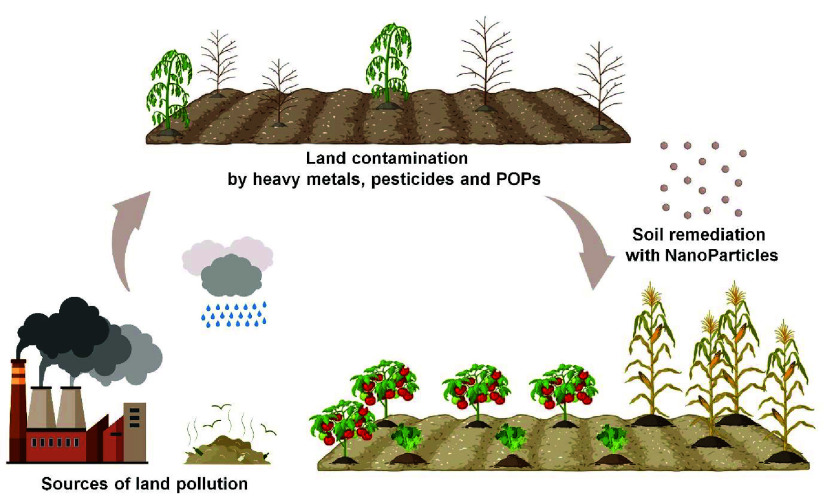
Nanotechnology is the newest addition to how we approach soil treatment. It works at a scale smaller than almost anything else in remediation. The leading material here is nanoscale zero valent iron, often shortened to nZVI, a form of iron engineered down to particles between roughly 1 and 100 nanometres across. At that size, iron behaves differently. It has a much larger surface area to react with, so it can pull double duty. It breaks down organic contaminants like petroleum hydrocarbons and chlorinated compounds through reduction reactions, and it binds and locks down heavy metals such as lead, chromium, cadmium and arsenic so they stop moving through soil and groundwater.
We treat this as an advanced technique inside our licensed chemical remediation scope, not a separate service standing on its own. That is a deliberate choice, and an honest one. Nanoremediation has real, published field results behind it, but researchers are still candid that most of the strongest data comes from laboratory and pilot studies rather than large scale sites. We only bring nZVI into a project where a site's soil chemistry and contaminant profile actually support it, and we pair it with the chemical treatment methods we already know work at scale in Qatar.
Our Key Focus Areas
Nanoparticle performance is sensitive to the soil it is placed in. Published research is clear that soil texture, organic matter content, moisture and competing minerals in the ground can all affect how well nanomaterials disperse and how long they stay reactive. Our focus is on getting that assessment right before any nanoparticle treatment is designed into a project, then integrating it properly with the chemical methods already covered under our MOECC licence rather than treating it as a stand alone fix.
100+
Pilot and field scale nZVI remediation cases documented in published international research, per a widely cited 2018 review of the technology's real world use.
- Global Field Trials (Published Literature)
117–286
Reported cost range, in US dollars per cubic yard of treated soil, documented across published nZVI field applications internationally.
- Cost Range, Published Field Studies
*An international field pilot documented by the US Geological Survey recorded reductions of 77, 85 and 83 percent for three separate chlorinated compounds within the first 10 days of nZVI treatment.
What You’ll Get
Nanotechnology done properly starts with an honest assessment of whether a site actually suits it, not a default upsell added to every quote.

Site Suitability Assessment
We check soil texture, organic matter, moisture and mineral content against what published research shows nanoparticles need to actually work, before recommending this route.

Integrated Treatment Design
nZVI is planned alongside our existing in-situ chemical oxidation programme, not sold as a replacement for methods we already know perform in Qatari conditions.

Performance & Safety Monitoring
Published studies have flagged effects on soil microbial life under some conditions. We monitor for this directly rather than assuming a clean result.
Frequently Asked Questions
Common questions about nanotechnology in soil remediation, and where it fits into our service scope.
It means using engineered particles, most commonly a form of iron called nanoscale zero valent iron, that are small enough to spread through soil and react directly with contaminants. They work by breaking down organic pollutants like hydrocarbons through chemical reduction, and by binding heavy metals so they can no longer move through the ground.
Not yet, and we would rather say that plainly than oversell it. Mechanical, chemical and biological treatment are established, field proven methods we deliver routinely. Nanotechnology has real published results behind it, including over a hundred documented pilot and field scale cases worldwide, but the technology is still newer and more selectively applied. We offer it where a site's conditions genuinely support it, as an advanced technique within our chemical treatment licence, not as a default option.
Published research supports two main uses. For organic contamination, it targets petroleum hydrocarbons and chlorinated solvents. For heavy metals, it has documented effectiveness against lead, chromium, cadmium, nickel, copper, mercury and arsenic, immobilizing them so they stop spreading through soil and groundwater.
Yes, and we think it is important to say so directly. Some published studies have found that nanoscale iron particles can affect soil microbial activity under certain conditions, alongside practical issues like particles clumping together and losing reactivity faster than expected outside a lab. This is exactly why we run a suitability assessment first and monitor soil health during and after treatment, rather than assuming a clean result every time.
No. It sits alongside them, most often paired with our in-situ chemical oxidation programme for hotspots where a more targeted, reactive treatment can add value. Our core mechanical, chemical and biological methods remain the proven backbone of every project.