

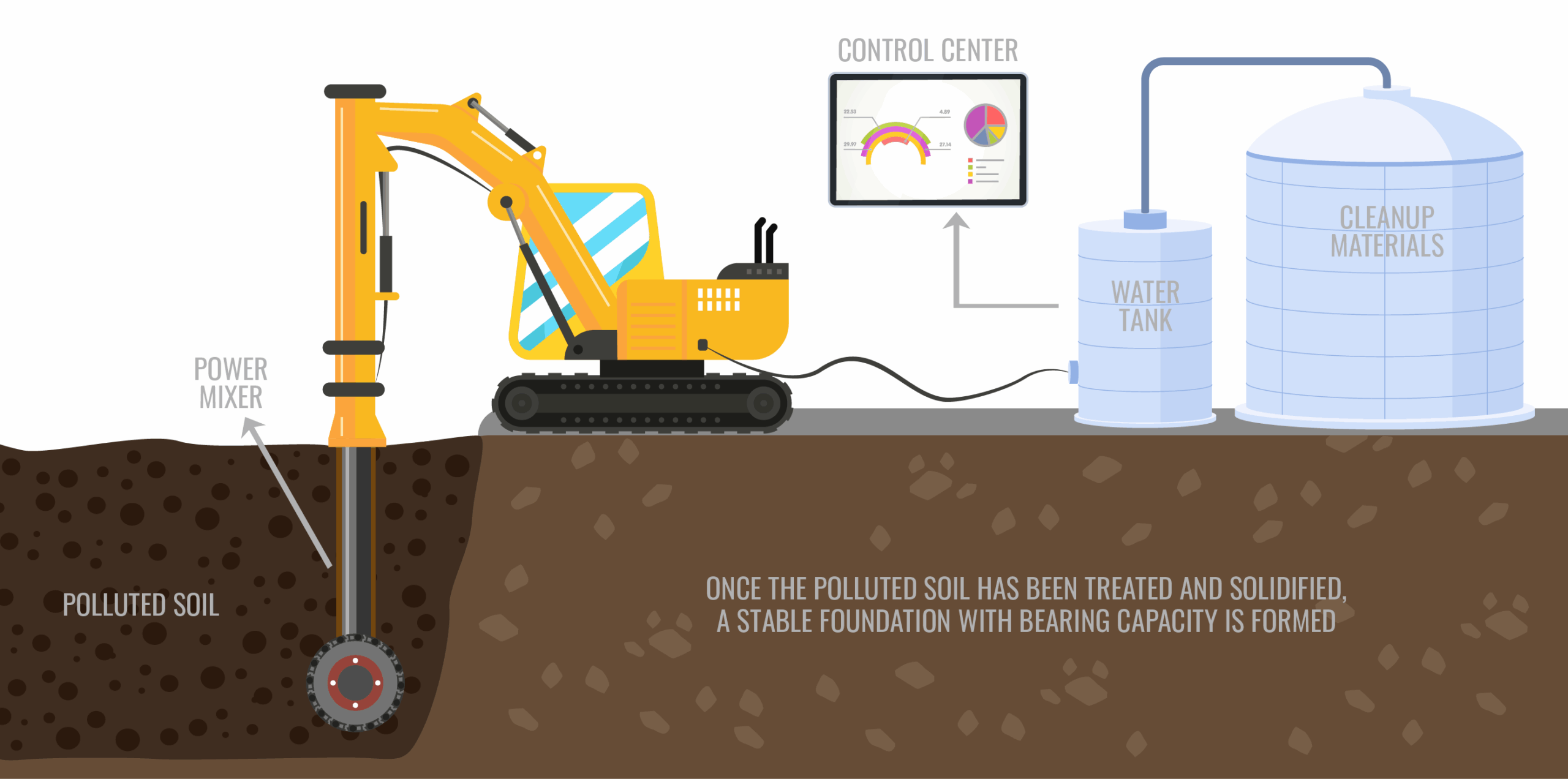
Some contaminants outlast biological treatment, or there simply isn’t time to wait months for microbes to work against a live construction deadline. Our Chemical Remediation service is built around In-Situ Chemical Oxidation (ISCO), deployed in hotspots carrying high concentrations of benzene, toluene or naphthalene, the BTEX group that resists slower treatment methods.
Oxidants, such as Fenton’s reagent or permanganate, are injected directly into the soil matrix at doses calculated against contaminant concentration. Where the water table sits close to the treatment zone, groundwater protection layers are installed before injection begins, so oxidants or mobilised contaminants cannot migrate beyond the intended treatment area.
Our Key Focus Areas
Chemical oxidation is rarely used on its own. It works best as a targeted tool for stubborn hotspots within a broader remediation programme that also treats the wider, lower-concentration contamination zone through mechanical or biological methods. We focus on precise dosing and groundwater protection, since using too much reagent is wasteful and using too little leaves hotspots untreated.
8–12
Average project closeout window, in weeks, including chemical treatment and post-verification.
- Week Average Closeout
40%
Average cost savings treating soil on-site with ISCO instead of excavation and disposal.
- Cost Savings vs Disposal
What You’ll Get
Chemical oxidation done right is a precisely dosed, groundwater-safe programme, not a blanket reagent dump into the ground.

ISCO Injection Programme
Fenton’s reagent or permanganate dosed to contaminant concentration and injected directly into the soil matrix.

Groundwater Protection
Protection layers installed ahead of injection wherever the water table sits close to the treatment zone.

TPH/BTEX Verification
Laboratory-confirmed contaminant reduction against your cleanup targets, documented for MOECC closure.
Frequently Asked Questions
Common questions about our chemical remediation service, process and MOECC compliance.
ISCO injects strong oxidants, typically Fenton’s reagent (a hydrogen peroxide and iron catalyst combination) or permanganate, directly into contaminated soil to break down compounds like benzene and toluene faster than biological processes can manage alone.
It requires careful management. Where the water table is close to the treatment zone, we install groundwater protection layers before injection begins, and dosing is calculated specifically to avoid mobilising contaminants or oxidants beyond the intended area.
Against the site’s own contaminant concentration data from site investigation, not a standard formula. Too little oxidant leaves hotspots untreated. Too much wastes reagent and risks unwanted reactions with the surrounding soil.
Yes, and usually should be. ISCO is most effective as a targeted tool for concentrated hotspots, paired with bioremediation or mechanical treatment for the wider, lower-concentration contamination zone across the same site.
Faster than biological treatment for the same contaminant load, which is why it’s the default choice when a project timeline can’t accommodate the 3–12 month window bioremediation typically needs.